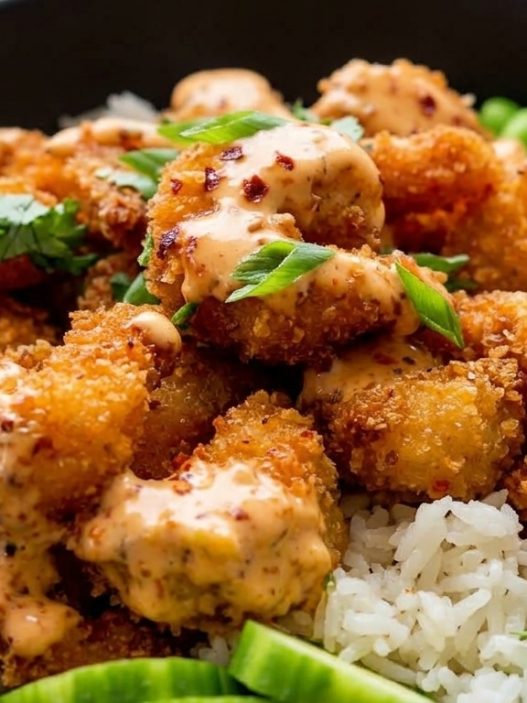




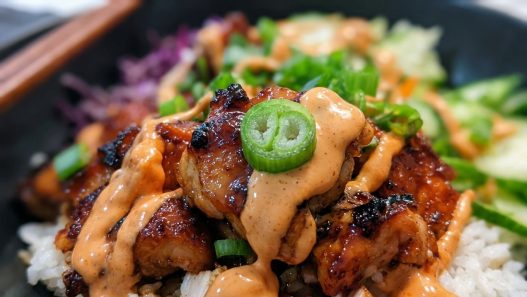
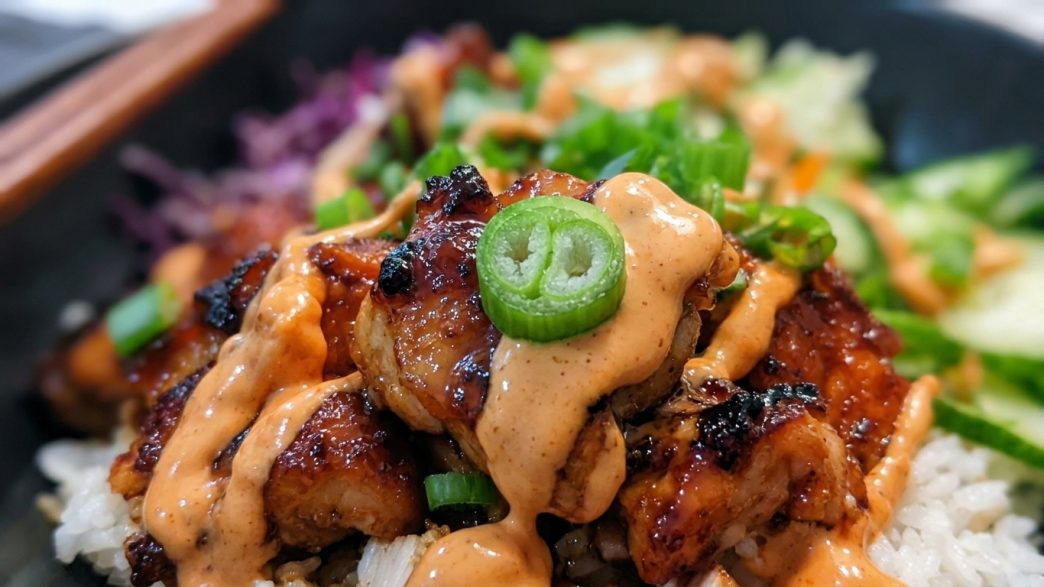
This Korean BBQ Chicken Rice Bowl layers crispy, sticky gochujang chicken with fluffy jasmine rice, tangy smashed cucumber, and a creamy gochujang sauce. It’s a satisfying, protein-packed dinner that comes together in about 35 minutes, making it especially handy when a regular chicken-and-rice night needs a serious flavor upgrade.
What Makes This Korean BBQ Chicken Rice Bowl Great?
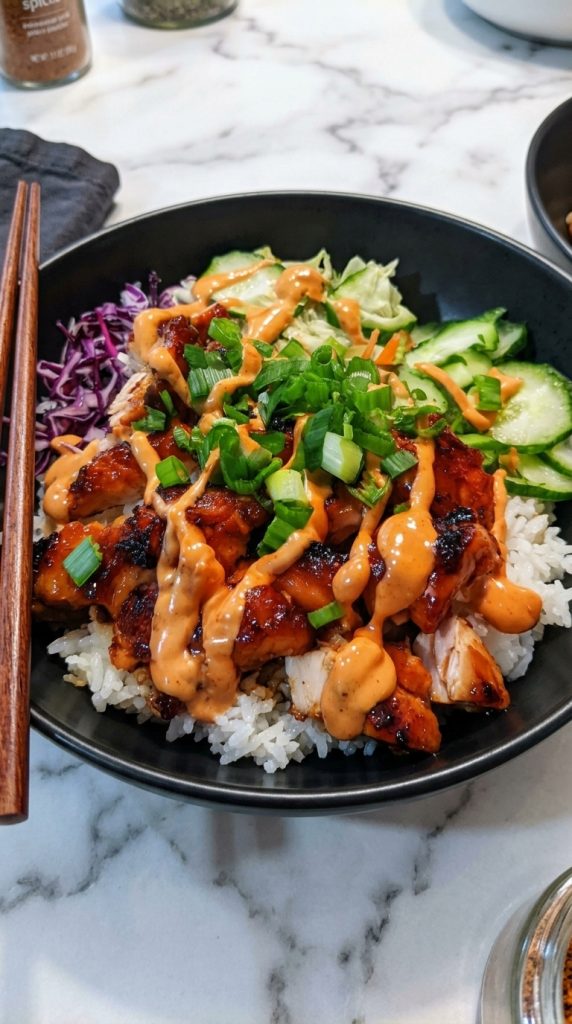
The chicken gets a light cornstarch coating for crisp edges before being tossed in a sweet, savory, spicy gochujang glaze. Cool cucumber and creamy sauce balance that heat, while rice turns everything into a filling bowl dinner.
- Weeknight-friendly, the chicken cooks quickly in a skillet and the other components can be prepared while the rice cooks.
- Easy to adjust the heat, use less gochujang in the creamy sauce for milder bowls or add extra for spice lovers.
- Great for meal prep, the rice, chicken, sauce, and cucumber can all be stored separately and assembled when needed.
- Easy to customize, everyone can build their own bowl with as much cucumber, sauce, sesame, or green onion as they like.
- Protein-packed and satisfying, chicken thighs provide plenty of protein while staying juicy during high-heat cooking.
The Crispy Gochujang Chicken
Boneless chicken thighs are ideal here because they stay tender even when cooked over fairly high heat. Cutting them into small pieces also means more surface area for crisping and, importantly, more places for that sticky sauce to cling.
A light cornstarch coating gives the chicken a delicate crust without requiring deep frying. Once glazed, those crispy edges soften slightly but still give the bowl much more texture than simply sautéing plain chicken.
What You’ll Need for the Chicken
- 1 1/4 lb boneless, skinless chicken thighs, cut into roughly 1-inch pieces so they cook quickly and evenly.
- 1 large egg, helps the cornstarch form a light coating around the chicken.
- 1/2 cup cornstarch, creates crisp, golden edges without a heavy breading.
- 1/2 teaspoon kosher salt, seasons the chicken before the glaze goes on.
- 1/4 teaspoon black pepper, adds a little extra savory seasoning.
- 2 tablespoons avocado oil, or another neutral high-heat oil, for shallow skillet frying.
The Sticky Korean BBQ Sauce
This is where the chicken gets its big punch of flavor. Gochujang brings fermented chile depth and gentle sweetness, soy sauce handles the salty-savory side, and honey helps everything become glossy and sticky in the skillet.
A little rice vinegar is useful here too. It cuts through the sweetness and keeps the glaze lively rather than heavy.
What You’ll Need for the Korean BBQ Sauce
- 2 tablespoons gochujang, provides the signature sweet, spicy, fermented chile flavor.
- 1 1/2 tablespoons low-sodium soy sauce, adds saltiness and plenty of umami.
- 1 tablespoon honey, helps sweeten and thicken the glaze.
- 2 teaspoons rice vinegar, adds acidity to balance the richer ingredients.
- 1 teaspoon toasted sesame oil, gives the finished sauce a nutty aroma.
- 2 tablespoons water, loosens the mixture so it can evenly coat the chicken before reducing.
The Creamy Gochujang Sauce
And now for the drizzle. This cooler, creamy sauce echoes the gochujang in the chicken without simply adding another layer of the exact same flavor.
Mayonnaise softens the chile heat, while rice vinegar and lime give it enough acidity to brighten the entire bowl. Make it first if you can, then let it sit while everything else cooks. The flavors get even better acquainted.
What You’ll Need for the Creamy Gochujang Sauce
- 1/3 cup mayonnaise, creates a rich, creamy base for drizzling.
- 1 tablespoon gochujang, adds color, heat, and savory chile flavor.
- 2 teaspoons rice vinegar, keeps the sauce bright rather than overly rich.
- 1 teaspoon fresh lime juice, adds a fresh citrusy finish.
- 1 to 2 teaspoons water, thins the sauce to an easy drizzling consistency.
The Smashed Cucumber
With sticky chicken and creamy sauce happening in the same bowl, something fresh and crunchy is essential. Enter cucumber.
Lightly smashing the cucumber creates craggy edges that grab onto the vinegar and sesame seasoning. It only needs a short rest, so there’s no need to make a full batch of traditional pickles.
What You’ll Need for the Smashed Cucumber
- 1 large English cucumber, stays crisp and has relatively few seeds.
- 1 tablespoon rice vinegar, gives the cucumber a quick-pickled tang.
- 1 teaspoon toasted sesame seeds, add nuttiness and a subtle crunch.
- 1/4 teaspoon kosher salt, seasons the cucumber and helps draw out a little moisture.
- 1/2 teaspoon honey, rounds out the sharpness of the vinegar.
The Jasmine Rice
Jasmine rice makes a simple, fragrant base that absorbs any extra glaze and creamy gochujang sauce. White jasmine rice is especially good when you want that soft, fluffy contrast against the crispy-edged chicken.
Already have leftover rice? Even better. Reheat it with a tiny splash of water and dinner gets that much faster.
What You’ll Need for the Rice
- 1 1/2 cups uncooked jasmine rice, makes enough fluffy rice for approximately 4 generous bowls.
- 2 cups water, cooks the rice until tender, although the exact amount can be adjusted according to package directions.
- 1/4 teaspoon kosher salt, lightly seasons the rice so it isn’t bland underneath all those toppings.
How to Make Korean BBQ Chicken Rice Bowls
Make the Creamy Gochujang Sauce
Whisk the mayonnaise, gochujang, rice vinegar, lime juice, and 1 teaspoon water together in a small bowl. Add another teaspoon of water if needed until the sauce is creamy but loose enough to drizzle. Refrigerate it while you prepare the rest of the bowl.
Prepare the Smashed Cucumber
Cut the cucumber into 2-inch sections, then gently press each piece with the flat side of a large knife until it cracks. Tear or chop the pieces into bite-sized chunks and toss them in a bowl with the rice vinegar, sesame seeds, salt, and honey. Let the cucumber sit for about 15 minutes, then drain off excess liquid before serving.
Cook the Rice
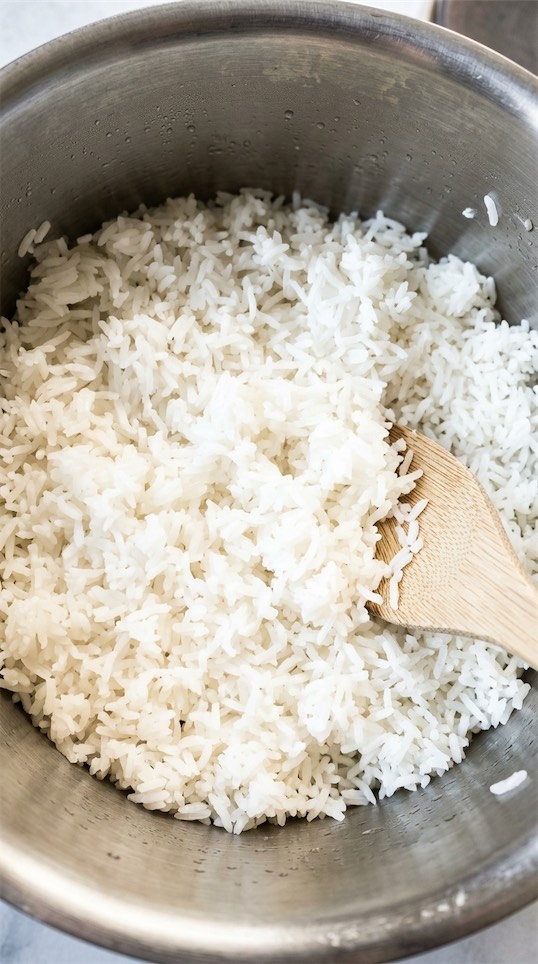
Rinse the jasmine rice under cool running water until the water becomes mostly clear. Add it to a saucepan with 2 cups water and the salt, bring to a gentle boil, then cover and reduce the heat to low. Cook for about 15 minutes, or according to the package directions, then remove from the heat and let it stand covered for 5 to 10 minutes before fluffing with a fork.
Coat the Chicken
Pat the chicken pieces dry and place them in a large bowl with the egg, salt, and black pepper. Stir until every piece is lightly coated, then sprinkle in the cornstarch a little at a time. Toss well until the chicken has an even, slightly craggy coating rather than patches of loose cornstarch.
Crisp the Chicken
Heat 1 tablespoon avocado oil in a large nonstick or well-seasoned skillet over medium-high heat. Add half of the chicken in a single layer and cook for about 6 to 8 minutes, turning occasionally, until crisp and golden on several sides. Transfer it to a plate, add the remaining oil, and repeat with the second batch. The thickest pieces should reach 165°F internally.
Don’t crowd the skillet here. A little breathing room is what gets those edges browned instead of steamed, and those crispy bits are soooo good once the glaze hits them.
Mix the Korean BBQ Sauce
While the chicken cooks, whisk together the gochujang, soy sauce, honey, rice vinegar, sesame oil, and water in a small bowl. Make sure the gochujang is completely blended into the liquid so you don’t end up chasing little chile paste lumps around the skillet later.
Glaze the Chicken
Carefully wipe excess oil and any very dark crumbs from the skillet, then return all the cooked chicken to the pan over medium heat. Pour in the Korean BBQ sauce and toss continuously for 1 to 2 minutes. It’s ready when the sauce has reduced into a shiny, sticky coating that clings to every piece.
Assemble the Bowls
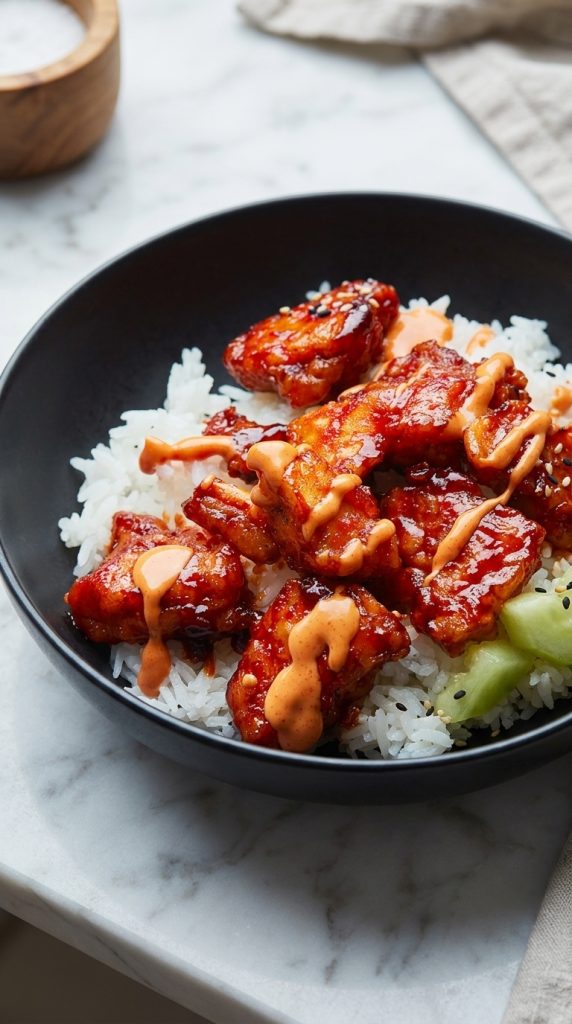
Divide the warm jasmine rice among 4 bowls and add the glazed chicken and drained cucumber. Spoon or drizzle the creamy gochujang sauce generously over the top. Finish with any extra toppings you like and serve while the chicken is still hot and slightly crisp around the edges.
Variations and Customizations
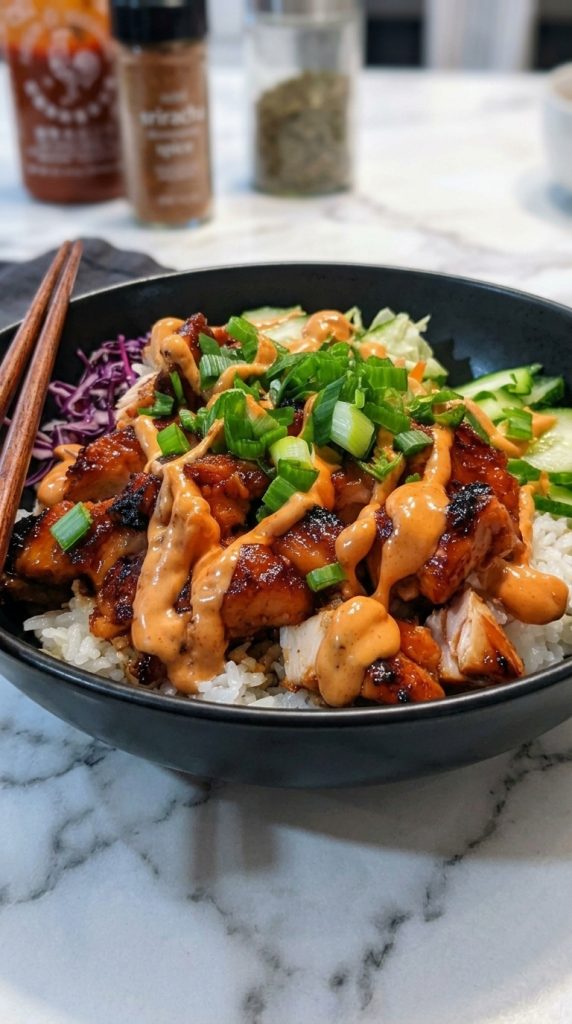
These bowls are pretty forgiving, so there’s plenty of room to work with what you already have. Keep the basic combination of savory protein, rice, something crisp and acidic, and creamy sauce, and you can make quite a few swaps without losing what makes the dish work.
- Use chicken breast, cut it into small, evenly sized pieces and watch the cooking time carefully because it dries out faster than thighs.
- Try ground chicken or turkey, skip the egg and cornstarch coating, brown the meat directly in the skillet, then stir in the glaze.
- Swap the rice, short-grain white rice, brown rice, or even quinoa can work as the base.
- Add more vegetables, steamed edamame, shredded carrots, sautéed mushrooms, or quickly stir-fried broccoli all fit naturally into these bowls.
- Make it less spicy, reduce the gochujang in both sauces and add a little extra honey to the chicken glaze.
- Make a vegetarian version, use pressed extra-firm tofu in place of chicken, coating the cubes lightly with cornstarch before pan-frying until crisp.
Toppings, Add-Ons, and Finishing Touches
The cucumber and creamy sauce technically give these bowls everything they need, but a few finishing touches can make them even better. Think freshness and crunch rather than piling on toppings just for the sake of it.
- Thinly sliced green onions, add freshness and a mild onion bite.
- Toasted sesame seeds, bring extra crunch and reinforce the sesame flavor in the sauce.
- Kimchi, adds fermented tang, heat, and plenty of personality.
- Shredded carrots, give the bowl extra color and fresh crunch.
- Sliced avocado, works particularly well if you love a creamier, milder bowl.
- Fresh lime wedges, add a final hit of acidity that cuts through the sticky glaze.
- Extra gochujang, perfect for anyone at the table who wants considerably more heat.
Storing, Reheating, and Meal Prep
For meal prep, store the cooked rice and glazed chicken in separate airtight containers in the refrigerator for up to 4 days. Keep the cucumber and creamy gochujang sauce in their own containers so they stay cold and fresh. The cucumber is at its crunchiest within the first 1 to 2 days, although it can safely be refrigerated longer.
Reheat the chicken and rice until piping hot, adding a small splash of water to the rice before microwaving to help restore its moisture. Add the cucumber and creamy sauce only after reheating. The cooked chicken can also be frozen for up to 2 months, but freeze the rice separately and make the cucumber and creamy sauce fresh for the best texture.
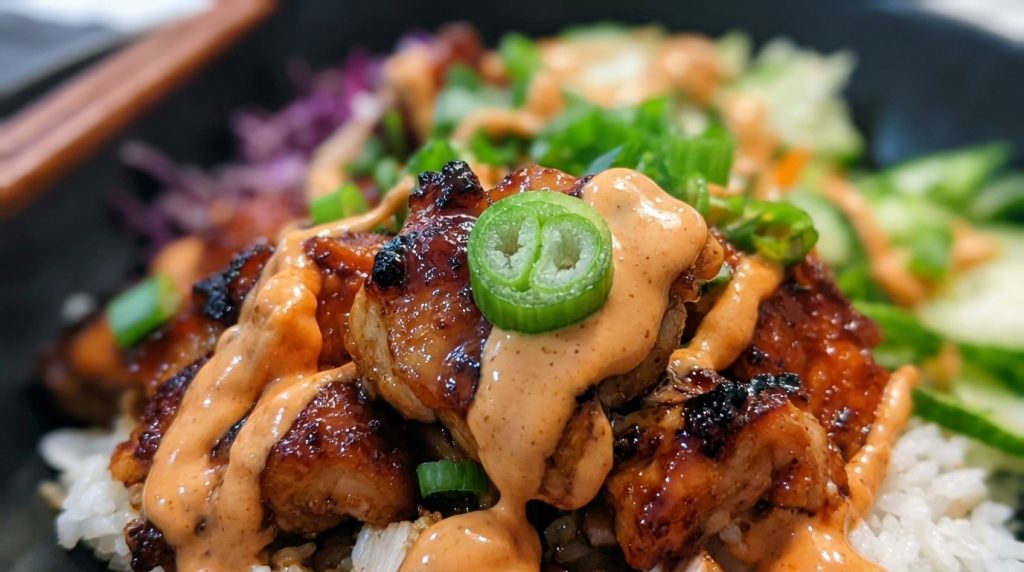

Korean BBQ Chicken Rice Bowl with Creamy Gochujang Sauce
Description
Crispy chicken thighs coated in a sweet and spicy gochujang glaze, served over fluffy jasmine rice with tangy smashed cucumber and a creamy gochujang sauce. A balanced rice bowl with tender chicken, fresh crunch, and plenty of savory Korean-inspired flavor.
Ingredients
For the Creamy Gochujang Sauce
For the Smashed Cucumber
For the Chicken
For the Korean BBQ Sauce
For the Rice
Instructions
Make the Creamy Gochujang Sauce
-
Add the mayonnaise, gochujang, rice vinegar, lime juice, and water to a small mixing bowl. Whisk until completely smooth and creamy with no streaks of gochujang remaining. Cover and refrigerate for 15 minutes while you prepare the remaining ingredients.
Prepare the Smashed Cucumber
-
Cut the cucumber into 2-inch pieces and place them on a cutting board. Gently press each piece with the flat side of a large knife until it cracks, then chop or tear it into bite-sized chunks. Place the cucumber in a medium mixing bowl and toss with the rice vinegar, sesame seeds, salt, and honey. Refrigerate for 15 minutes, then drain away the excess liquid before serving.
Cook the Rice
-
Place the jasmine rice in a fine-mesh strainer and rinse under cool running water until the water runs mostly clear. Transfer it to a medium saucepan and add the water and salt. Bring to a gentle boil, cover, reduce the heat to low, and cook for about 15 minutes, or until the rice is tender and the water has been absorbed. Remove the saucepan from the heat and leave it covered for 5 minutes, then fluff the warm rice gently with a fork.
Coat the Chicken
-
Cut the chicken thighs into approximately 1-inch pieces and pat them dry with paper towels. Place the chicken in a large mixing bowl and add the egg, salt, and black pepper, stirring until evenly coated. Add the cornstarch gradually and toss until every piece has a light, slightly craggy coating. A little unevenness in the coating is fine and will help create crisp edges during cooking.
Cook the Chicken
-
Heat 1 tbsp avocado oil in a large nonstick or well-seasoned skillet over medium-high heat. Arrange 1/2 of the chicken in a single layer and cook for 6 to 8 minutes, turning occasionally, until golden and crisp on the outside. Transfer the cooked chicken to a clean plate, add the remaining 1 tbsp oil, and repeat with the remaining chicken. Check the thickest pieces with an instant-read thermometer to make sure the chicken has reached an internal temperature of 165°F.
Mix the Korean BBQ Sauce
-
Add the gochujang, soy sauce, honey, rice vinegar, sesame oil, and water to a small bowl. Whisk until the mixture is completely smooth and evenly combined. The sauce should be pourable at this stage and will become thicker and glossy when heated.
Glaze the Chicken
-
Carefully wipe excess oil and any dark crumbs from the skillet, then return all of the cooked chicken to the pan over medium heat. Pour the Korean BBQ sauce over the chicken and toss continuously for 1 to 2 minutes. Remove the skillet from the heat once the sauce has thickened into a warm, glossy glaze that evenly coats the chicken.
Assemble the Bowls
-
Divide the warm jasmine rice evenly among 4 serving bowls. Top each portion with the glazed chicken and drained smashed cucumber. Drizzle the chilled creamy gochujang sauce over the chicken just before serving.
Note
For crispier chicken, cook it in batches and leave enough room between the pieces for moisture to escape. Crowding the skillet can cause the chicken to steam instead of becoming golden.
Gochujang brands vary in heat level, so choose a mild or medium variety if you prefer less spice.
For meal prep, refrigerate the chicken and rice separately from the cucumber and creamy sauce. The cooked chicken and rice can be stored in airtight containers for up to 4 days. The cucumber has the best texture within 2 days.
Reheat the chicken and rice until thoroughly hot. Add 1 tsp water to each portion of rice before microwaving to help keep it soft and moist. Keep the cucumber and creamy sauce chilled and add them after reheating.
Cooked chicken can be frozen in an airtight freezer-safe container for up to 2 months. Thaw it overnight in the refrigerator before reheating.