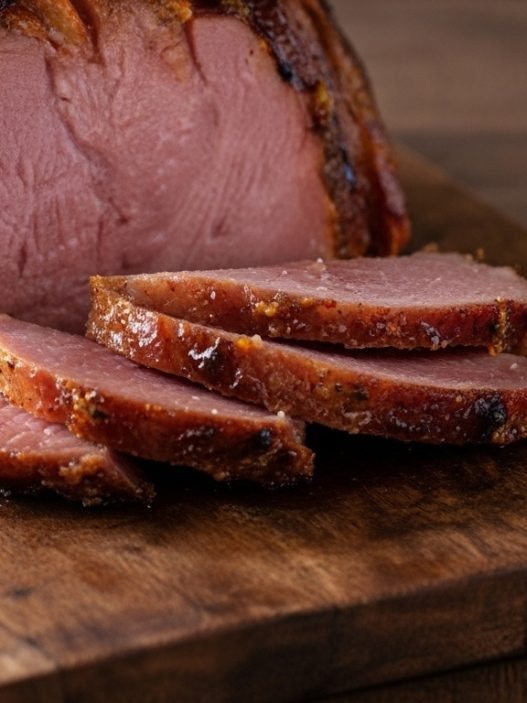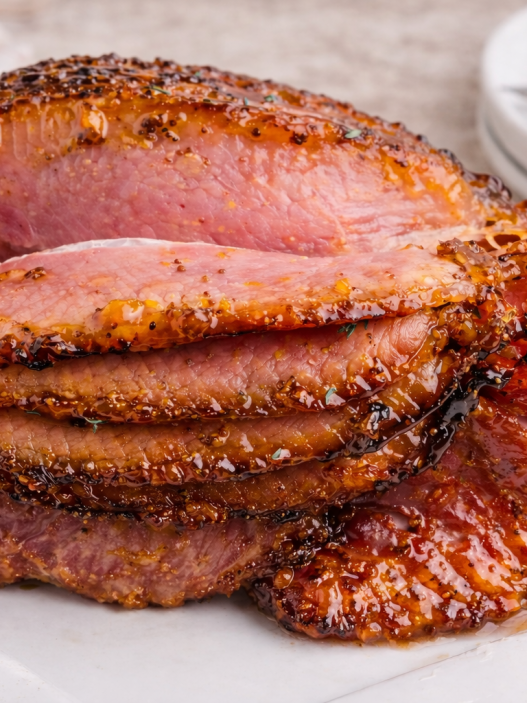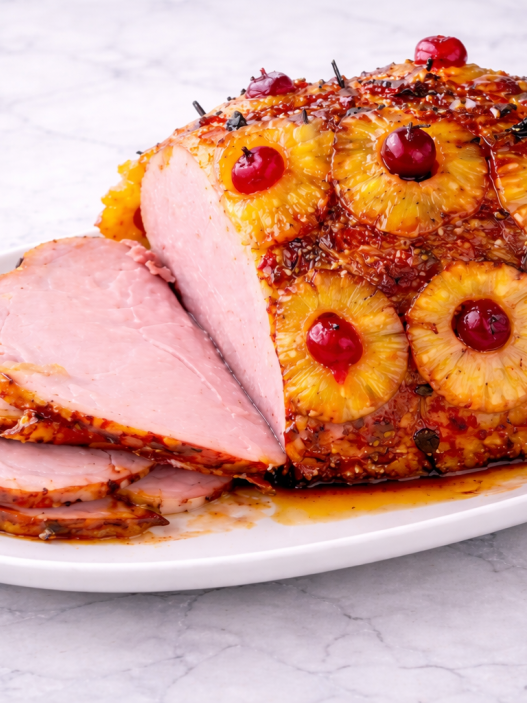







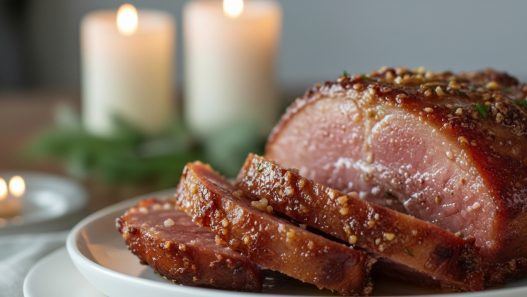
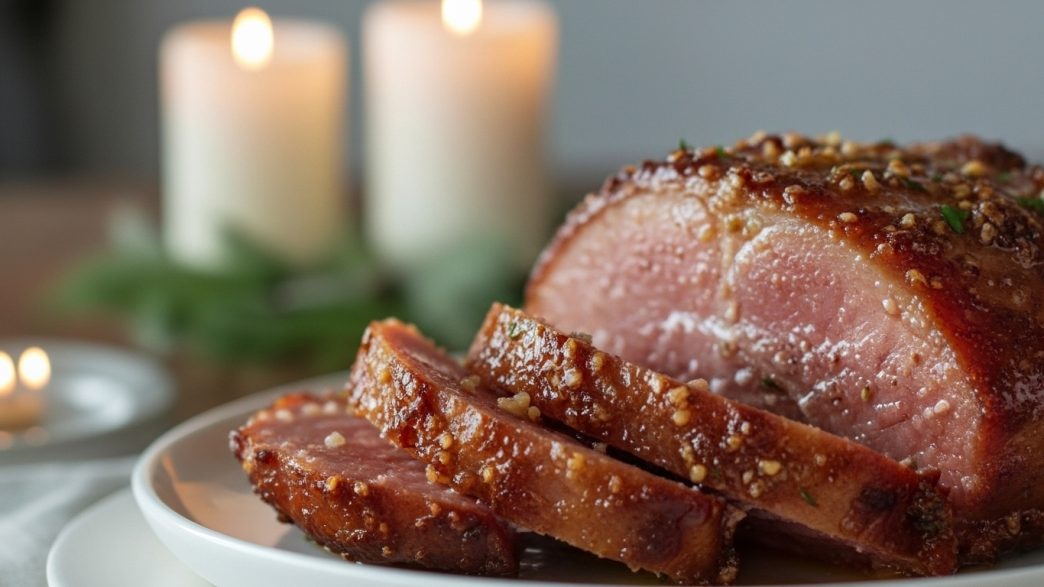
If you’ve ever put a ham in the oven and felt weirdly unsure what “done” actually means (because it is already cooked), this recipe clears that up. The goal here is not “cook the ham,” it’s to warm it through gently and build a glaze that sets properly without burning.
Honey pineapple glazed ham is a good option if you want something that looks like a centerpiece but behaves like a low-effort main. It works for Easter, Christmas, Sunday dinners, and any gathering where you want reliable slices and leftovers that still taste good the next day.
What Makes a Great Honey Pineapple Glazed Ham?
A good glazed ham is simple, but it has a few points where it can go wrong, so the details matter.
- A gentle oven temperature so the slices stay juicy
- A glaze thick enough to cling, not run
- Foil early to warm through, uncovered late to caramelize
- Basting that builds layers instead of washing the glaze off
- A resting window so slices stay moist
Full Ingredient List
- 8–10 lb bone-in fully cooked ham, preferably spiral cut
- 1/2 cup honey
- 1 cup canned crushed pineapple, drained well
- 1/2 cup brown sugar, packed
- 2 tablespoons Dijon mustard
- 1 tablespoon apple cider vinegar
- 1/2 teaspoon ground cinnamon
- 1/8 teaspoon ground cloves
- 1/4 teaspoon ground black pepper
- About 20 whole cloves, optional for studding
Equipment You’ll Need
- Roasting pan
- Roasting rack (or a foil ring to lift the ham slightly)
- Aluminum foil
- Small mixing bowl
- Spoon or small whisk
- Silicone brush
- Sharp knife
- Cutting board
- Instant-read thermometer
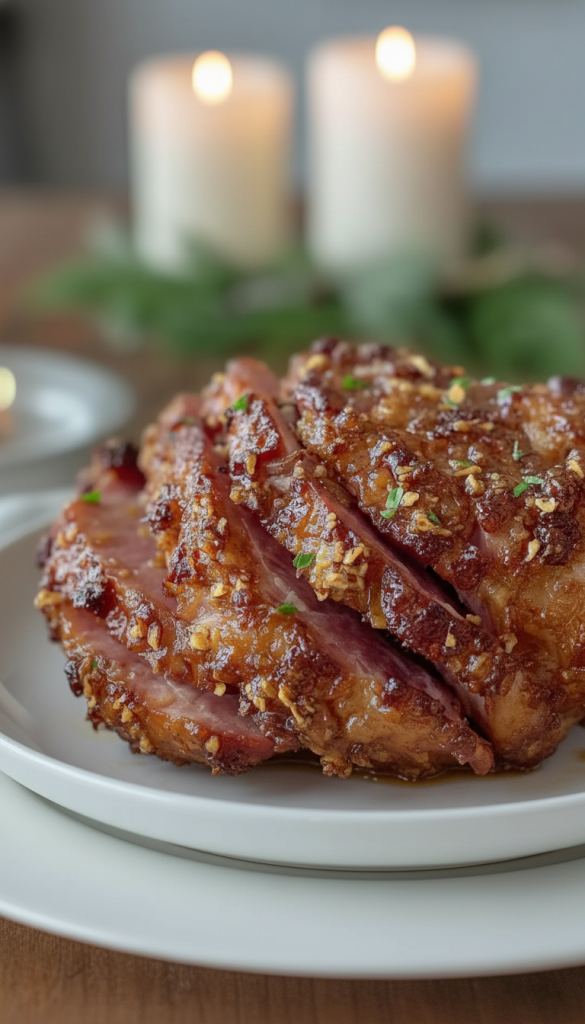
The Ham
A fully cooked ham is about warming, not cooking from raw. That sounds simple, but the risk is drying it out by blasting it uncovered for too long.
A bone-in ham is forgiving because the bone helps it heat more gradually, where a spiral-cut makes serving easy, but it also means the meat can dry out faster if the oven is too hot or the surface is left exposed too early.
What You’ll Need for the Ham
- 1 fully cooked bone-in ham (click here if you are set on using spiral ham)
- About 20 whole cloves, optional for a warm, subtle top note
Honey Pineapple Glaze
This glaze is meant to balance sweet, salt, and warmth, not turn the ham into candy.
Honey gives shine and browning, brown sugar adds depth, pineapple keeps it bright, and mustard plus vinegar stops the sweetness from tasting heavy once it concentrates in the oven.
What You’ll Need for the Honey Pineapple Glaze
- 1/2 cup honey, for gloss and browning
- 1 cup crushed pineapple, drained well so the glaze stays thick
- 1/2 cup brown sugar, for caramel flavor and body
- 2 tablespoons Dijon mustard, to balance sweetness
- 1 tablespoon apple cider vinegar, to sharpen the finish
- 1/2 teaspoon ground cinnamon, warm background flavor
- 1/8 teaspoon ground cloves, used lightly so it does not dominate
- 1/4 teaspoon black pepper, keeps the glaze from tasting flat
Optional Variations or Adjustments
This recipe is flexible as long as you keep the glaze thick and the oven gentle.
- Swap Dijon for yellow mustard if that’s what you have
- Add 1/4 teaspoon ground ginger if you want a slightly warmer spice profile
- Replace apple cider vinegar with pineapple juice if you want a softer tang
- Skip whole cloves if you dislike that flavor, the glaze still works
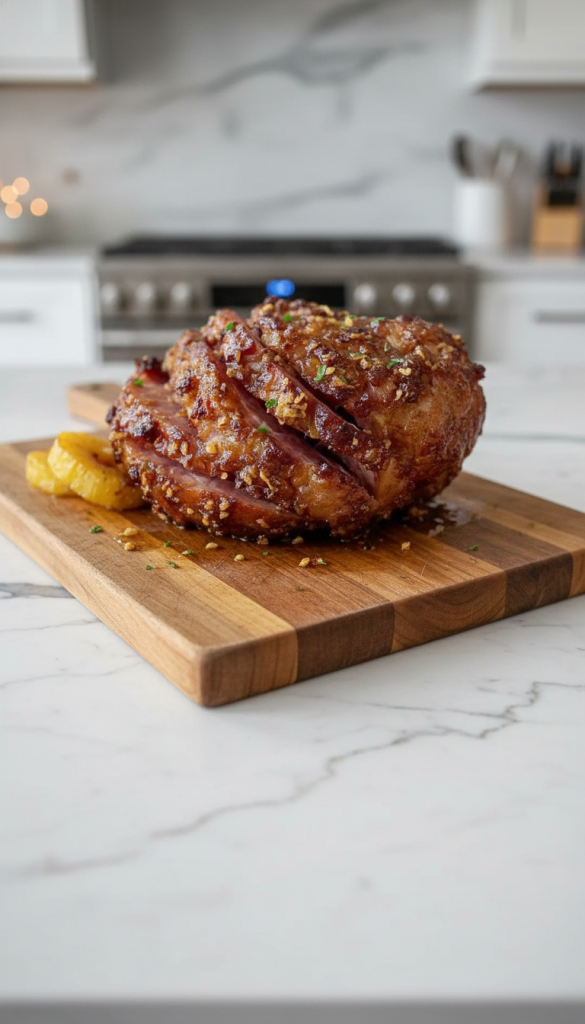
Toppings / Finishing Touches
Finishing is mostly about how the ham looks on the table and how the glaze behaves once sliced.
A final brush of glaze right at the end gives you a glossy surface that reads as intentional, even if the prep was minimal.
- Extra spooned glaze from the pan, brushed on just before serving
- A small amount of drained crushed pineapple, scattered on the platter
- Fresh black pepper, a light dusting for contrast
How to Make Honey Pineapple Glazed Ham
Heat the Oven and Prep the Pan
Set the oven to 325°F. Place a rack in a roasting pan, or build a thick foil ring so the ham sits slightly lifted rather than directly on the pan. This helps heat circulate and prevents the underside from sitting in hot juices.
Preparing the Ham
Unwrap the ham, remove any plastic disk, and pat the surface dry with paper towels.
Score the outside in a shallow diamond pattern, about 1/2 inch deep, aiming to cut through the surface fat without slicing down into the meat.
If using whole cloves, press them into the intersections, spacing them out so the flavor stays gentle.
Mix the Glaze
In a small bowl, stir together honey, drained crushed pineapple, brown sugar, mustard, vinegar, cinnamon, ground cloves, and black pepper.
Stir until the mixture looks glossy and thick rather than grainy.
If it feels stiff, let it sit for 2 minutes, then stir again, so the sugar relaxes into the honey.
Apply the First Layer
Place the ham on the rack and brush a generous layer of glaze over the surface, pushing it into the scored cuts.
Use the brush like you are pressing the glaze in, not painting lightly, the scoring is there to hold it.
Do not dump extra glaze into the pan, keep it in the bowl for basting.
Bake Covered to Warm Through
Tent the ham loosely with foil, leaving space so the foil is not stuck to the glaze.
Bake for about 15 minutes per pound, so an 8 lb ham is roughly 120 minutes, and a 10 lb ham is roughly 150 minutes.
The purpose of the foil is to warm the ham through without drying the outer slices.
Baste in Layers
Every 20 minutes, pull the pan out slightly, open the foil carefully, and brush on more glaze.
Each layer should look thin and glossy, not thick and clumpy.
If the glaze starts to slide, it usually means the ham surface is wet or the foil is touching it, just keep brushing lightly and it will build as it heats.
Uncover to Caramelize
In the last 20 minutes, remove the foil and brush on a thicker final layer of glaze.
This is when the glaze sets and darkens.
Watch closely, honey can go from golden to too dark quickly once exposed, so you want a deep amber look rather than a hard brown crust.
Check Temperature and Rest
Use an instant-read thermometer and aim for 140°F in the thickest part, without touching the bone.
Once it hits temperature, remove it from the oven and let it rest 15–20 minutes.
Resting matters because it lets juices settle so the slices stay moist instead of weeping onto the board.
Slice and Serve
Transfer the ham to a cutting board and slice along the spiral lines, or carve thin slices if it is not spiral cut.
Spoon a little of the warm pan glaze over the platter if you like, but do not flood it, you want shine and flavor, not soggy slices.
Storing, Reheating, or Make-Ahead Tips
Store leftover ham tightly wrapped or in an airtight container in the fridge for up to 4 days. Keep a small cup of pan juices or extra glaze separate, it helps a lot for reheating.
For reheating, place slices in a baking dish with a few spoonfuls of juices, cover tightly with foil, and warm at 300°F until hot. A gentler reheat keeps the slices tender, especially with spiral ham, where the edges dry faster.
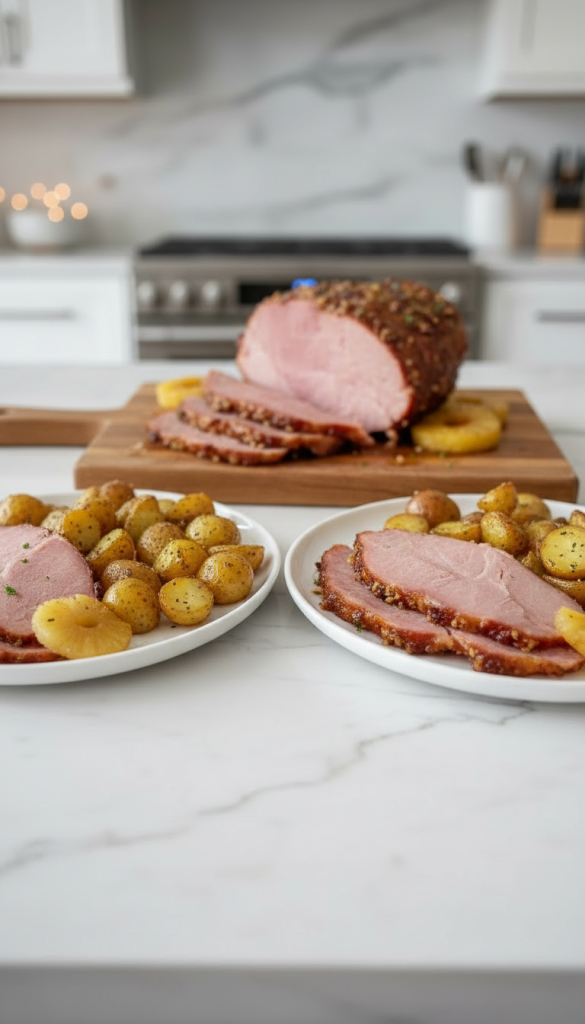
Using Spiral Ham
A spiral-cut ham is already fully sliced almost all the way through. That makes serving easy, but it also means much more exposed surface area, which changes how moisture, heat, and glaze behave.
If you treat a spiral ham the same way as an unsliced ham, it almost always dries out.
What changes when you use spiral ham
1. It dries faster
Because the slices are pre-cut, heat moves between them quickly. The edges dry out long before the center is warm if the ham is left uncovered too early or baked too hot.
What to do instead
- Keep the ham covered with foil for most of the bake
- If you are using a spiral-cut ham, lower the oven temperature to 300°F (150°C).
- Spiral hams heat faster because the slices are already separated. Dropping the temperature slows moisture loss and gives the glaze time to set instead of scorching.
2. The glaze can slip between slices
Glaze doesn’t just sit on the surface, it runs down into the cuts. That sounds good, but it often means the outside ends up bare and the pan ends up sweet and burnt.
What to do instead
- Use a thicker glaze
- Press glaze onto the surface, don’t pour it
- Save most of the glaze for basting and the final layer
How to make a thicker glaze
Spiral ham needs a glaze that clings, not pours.
Do one of the following, not all.
Option 1: Reduce the glaze slightly
- After mixing, transfer the glaze to a small saucepan
- Simmer gently over medium-low heat for 5–7 minutes, stirring often
- It should coat the back of a spoon and drip slowly
Option 2: Increase body without cooking
- Add 2 additional tablespoons brown sugar
- Stir until fully dissolved
- This thickens the glaze without changing flavor balance much
Option 3: Add controlled starch (most reliable)
- Whisk 1 teaspoon cornstarch with 1 tablespoon cold water
- Stir into the glaze
- Heat gently for 1–2 minutes until glossy and thick
3. Basting needs to be gentler
Heavy basting can actually wash glaze off a spiral ham rather than build layers.
What to do instead
- First light coat before baking
- Then every 25–30 minutes, very lightly
- Final thicker coat only in the last 15 minutes, uncovered
- Use a brush, not a spoon, and press the glaze on instead of dragging it.
Total cooking time for spiral ham
At 300°F, plan for:
- 12–14 minutes per pound, covered
Uncover only for the final 15 minutes to set the glaze.
Example:
- 8 lb spiral ham: about 100–110 minutes total
- 10 lb spiral ham: about 125–140 minutes total
However you should always go by the temperature. Use a thermometer to determine when the ham is finished.
Remove it from the oven when the internal temperature reaches 140°F in the thickest part, regardless of the clock.
Target internal temperature
- Pull the ham at 140°F (60°C)
- Measure in the thickest part, avoiding the bone
- Spiral ham dries quickly above this point
One extra spiral-ham-specific step (worth it)
Before the first glaze, gently separate the slices just at the top and brush a small amount of glaze into the first inch of the cuts. Do not flood the pan.
This seasons the interior edges without drying them out.
Quick summary for spiral ham
- Oven: 300°F
- Covered: all but last 15 minutes
- Glaze: thick enough to cling
- Baste: every 25–30 minutes, lightly
- Pull temp: 140°F
- Rest: 15–20 minutes