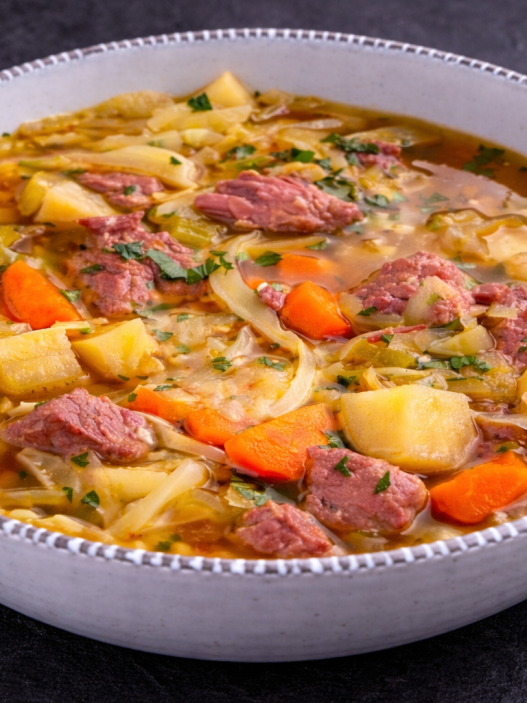







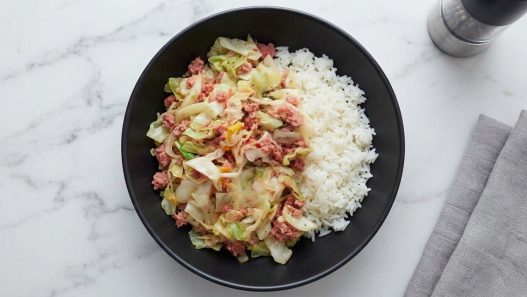
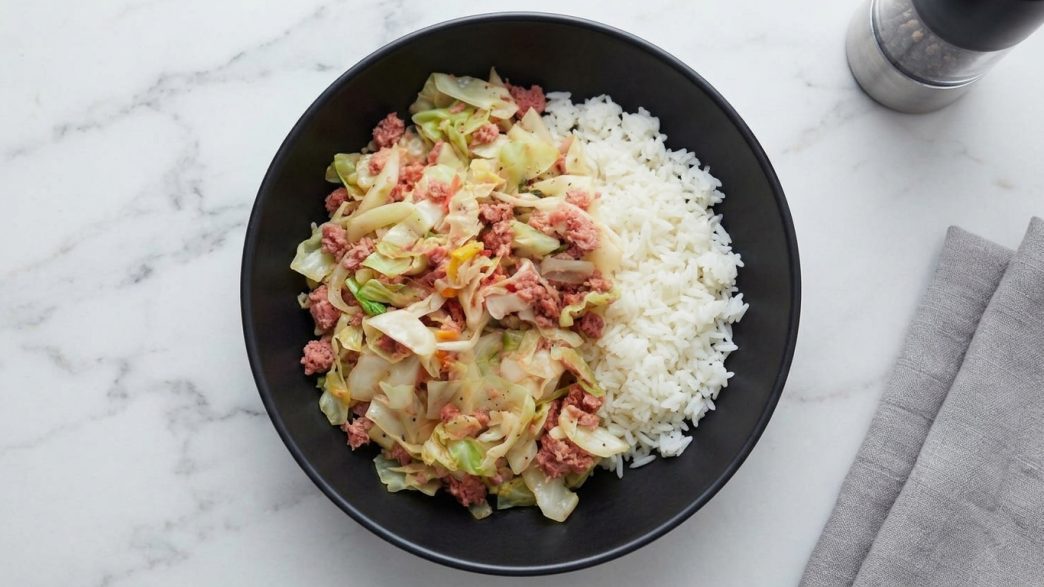
Jamaican corned beef and cabbage is canned corned beef cooked down with onion, scallion, thyme and scotch bonnet, then finished with shredded cabbage and carrot so the whole thing stretches into a full dinner. One 12 oz can feeds 5 people over rice, comes in around 18 to 22 grams of protein per serving, and takes about 30 minutes in a single skillet.
What Makes This Jamaican Corned Beef and Cabbage Great?
Cabbage does more here than bulk out the pan. It goes in at the very end and cooks for only a few minutes, so it stays sweet and slightly crisp against the soft, salty beef, and the liquid it releases loosens everything into a light sauce without you adding much water at all. Carrot adds color and a bit of natural sweetness, which is a useful counterweight to all that salt.
Why You’ll Love It
- One small can turns into dinner for 5 once the cabbage goes in, which makes this one of the cheapest ways to get a hot meal on the table.
- Cabbage, carrot, onion and a canned protein all keep for a long time, so this works as a genuine end-of-week dinner.
- One skillet and one rice pot, about 30 minutes start to finish.
- The scotch bonnet is measured rather than added whole, so you can keep the pan mild and let people add heat at the table.
- Roughly 2 cups of vegetables per serving, without anyone having to eat a side salad.
The Corned Beef
Canned corned beef arrives fully cooked, so the pan work is about breaking it into pieces and letting it pick up flavor from everything around it. It falls apart almost immediately once it warms through, which is why it is worth chilling the can first. Cold beef turns out in firm blocks that break into chunks, while room temperature beef tends to smear.
Give it a few minutes pressed against a hot pan before you stir, and some of it will brown properly. Those crisp edges are what stop the finished dish from tasting one-note.
What You’ll Need for the Corned Beef
- 1 can (12 oz) corned beef, chilled for at least 20 minutes so it breaks into pieces instead of paste.
The Cabbage and Carrot
Green cabbage is the right choice here. It holds its shape under heat far better than savoy, and it shreds into long ribbons that catch the sauce. Slice it thinly, around 1/4 inch, so it cooks in minutes rather than sitting in the pan long enough to go gray and sulfurous.
The important thing is restraint. Cabbage releases a surprising amount of water as it wilts, and a few minutes too long turns a fresh, glossy pan into something watery and dull. You want it just collapsed, still bright green, with a little snap left in the thicker ribs. Carrot goes in earlier because it takes longer to soften, and grating it means it practically melts into the sauce.
What You’ll Need for the Cabbage and Carrot
- 1 small green cabbage, about 1 1/2 lb, cored and thinly sliced, roughly 8 cups once shredded.
- 1 medium carrot, coarsely grated so it softens at the same rate as the peppers.
The Seasoning Base
This is where the flavor actually comes from. Onion and scallion whites soften into sweetness, garlic rounds things out, and whole thyme sprigs release their oils into the hot oil so you can lift the woody stems out later. Scotch bonnet brings the fruity heat that makes this taste properly Jamaican rather than like a generic skillet dinner.
A small amount of ground allspice sits underneath all of it. It is the warm, faintly clove-like note you find in jerk seasoning, and a quarter teaspoon is enough to make the pan smell like it has been cooking far longer than it has.
What You’ll Need for the Seasoning Base
- 1 tablespoon vegetable or canola oil, neutral so the thyme and scotch bonnet come through clearly.
- 1 medium yellow onion, finely chopped so it softens quickly.
- 3 scallions, sliced, with whites and greens kept separate.
- 3 garlic cloves, finely chopped.
- 3 sprigs fresh thyme, left whole so the stems are easy to remove, plus a few loose leaves saved for serving.
- 1/2 scotch bonnet chilli, deseeded and finely chopped, use 1/4 if you prefer things mild.
- 1/4 teaspoon ground allspice, adds a warm background note.
- 1 red bell pepper, cored and finely chopped, brings sweetness against the salt.
- 1 large plum tomato, chopped, just enough acidity without making the pan wet.
The Sauce
There is very little to the sauce, and that is deliberate. Ketchup brings sweetness, tang and body in one move, which is the traditional approach in most Jamaican kitchens. Unlike a plain bully beef, you barely need to add any liquid here, because the cabbage provides plenty on its own.
Black pepper goes in generously and a teaspoon of vinegar at the end lifts everything. One thing to watch: spreading one can of beef across 8 cups of cabbage dilutes the salt considerably, so this version does usually need a small pinch of salt at the end, which a plain bully beef never does. Taste before you add it.
What You’ll Need for the Sauce
- 2 tablespoons ketchup, sweetness, tang and color.
- 1/2 teaspoon freshly ground black pepper, be generous.
- 1 teaspoon white vinegar, stirred in at the end to sharpen the flavors.
- 1/4 teaspoon salt, only if needed after tasting.
- 2 tablespoons water, in reserve, only if the pan looks dry.
The Rice
Plain long-grain white rice soaks up the sauce without competing with it. Season the rice itself, since the beef mixture carries most of the salt on the plate and bland rice underneath makes the whole bowl taste flat.
What You’ll Need for the Rice
- 1 1/2 cups long-grain white rice, rinsed until the water runs clear so the grains stay separate.
- 2 1/4 cups water, the standard ratio for long-grain.
- 1/2 teaspoon salt, for the rice.
How to Make Jamaican Corned Beef and Cabbage
Prep and Chill
Put the unopened can of corned beef in the fridge for at least 20 minutes, then shred the cabbage, grate the carrot and chop everything else before you start cooking. Once the pan is going, the steps come quickly, and cabbage takes a few minutes to slice properly. Having it all ready in bowls makes the rest straightforward.
Cook the Rice
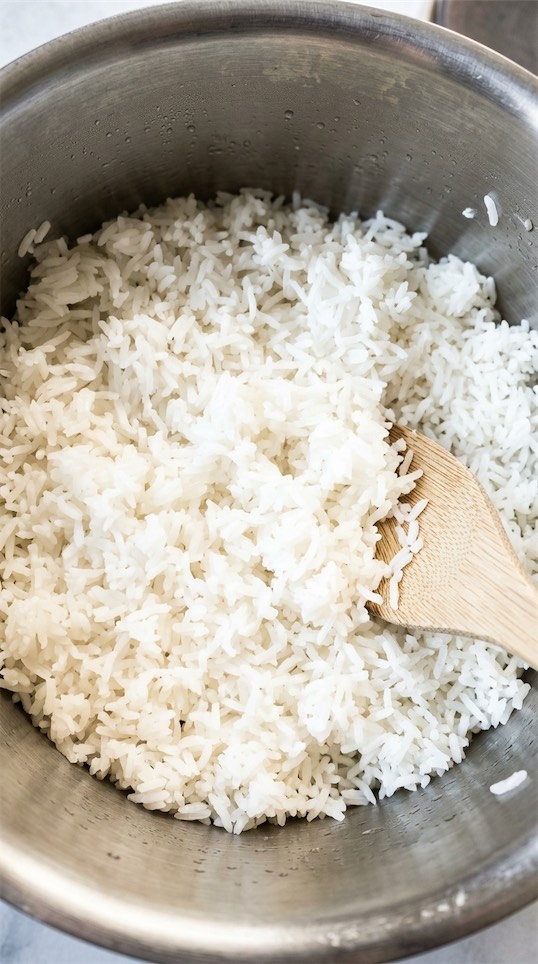
Rinse the rice in a sieve under cold water for about 30 seconds, until the water runs clear. Tip it into a medium saucepan with the water and salt, bring to a boil over high heat, then cover tightly and reduce to the lowest setting. Cook for 15 minutes without lifting the lid, then take it off the heat and leave it covered while you cook the beef, so it finishes steaming and turns fluffy.
Soften the Seasonings
Heat the oil in a large deep skillet or sauté pan over medium-low. Add the onion, scallion whites, garlic, thyme sprigs, scotch bonnet and allspice, and cook gently for 6 to 8 minutes, stirring now and then.
The onion should turn soft and translucent and the pan should smell warm and fragrant. Avoid browning at this stage, so drop the heat if anything colors quickly.
Add the Pepper, Tomato and Carrot
Stir in the bell pepper, tomato and grated carrot and cook for 4 to 5 minutes. The tomato will collapse into a soft, jammy layer at the base of the pan while the pepper keeps a slight bite and the carrot turns tender.
Everything should look loose and chunky rather than smooth.
Brown the Corned Beef
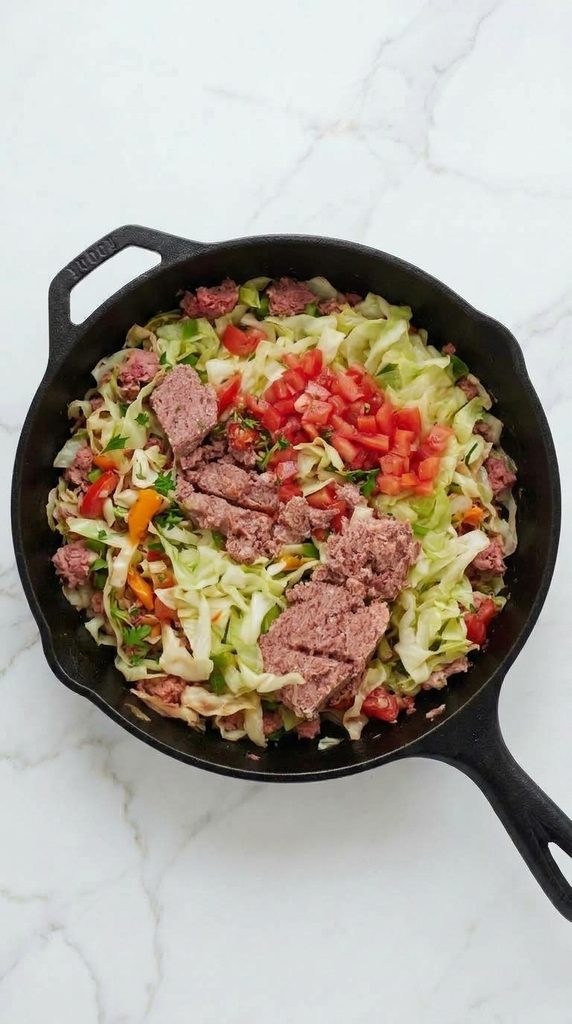
Raise the heat to medium-high and add the chilled corned beef in chunks. Break it apart with a wooden spoon, pressing it into the seasonings, then leave it undisturbed for a minute at a time so parts of it catch against the pan.
Give it about 3 to 4 minutes. Stop while some texture remains, since soft pieces are better than a smooth paste.
Wilt the Cabbage
Add the cabbage in two or three handfuls, stirring each batch until it drops in volume enough to fit the next.
Once it is all in, cover the pan and cook for 3 minutes to let the steam do the work.
The cabbage will look like far too much at first and then collapse to about a third of its size, which is completely normal.
Finish the Pan

Take the lid off, stir in the ketchup and black pepper, and cook uncovered for another 3 to 4 minutes so the liquid the cabbage released can cook away.
The mixture should look glossy and just moist rather than sitting in a pool, and the cabbage should still be bright with a little snap in the ribs.
Lift out the thyme stems, stir in the vinegar and most of the scallion greens, then taste and add the salt only if it needs it. If the pan looks dry instead, splash in the reserved water.
Serve
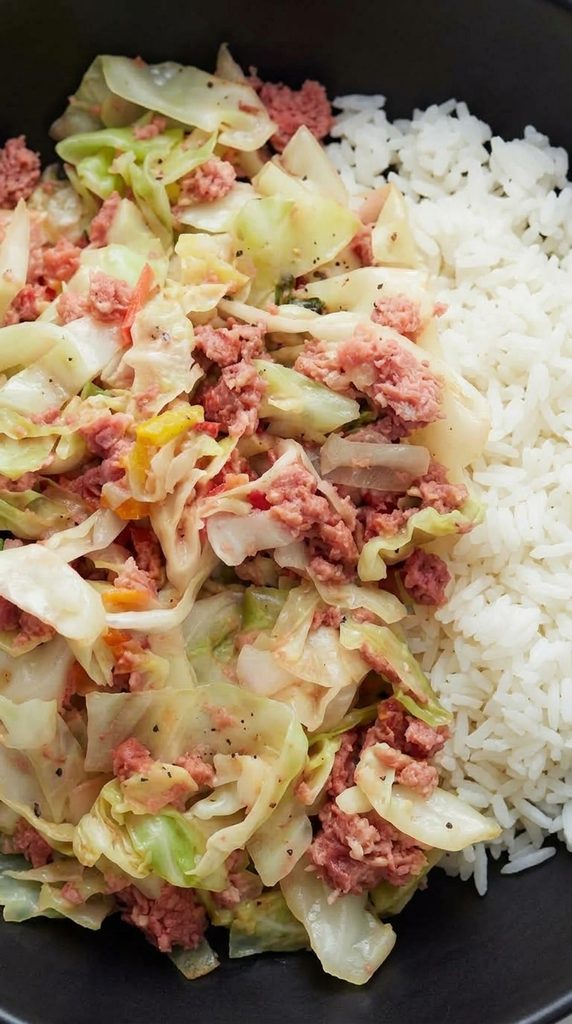
Fluff the rice with a fork and divide it between bowls, then spoon the corned beef and cabbage over the top so the sauce runs down into it.
Scatter over the remaining scallion greens and the reserved thyme leaves and serve straight away, while the cabbage still has some bite.
Variations and Customizations
Most of the useful changes here come down to heat level and what vegetables you already have in the drawer. The method stays the same whichever direction you go.
- Swap the scotch bonnet for a habanero, the closest match for both heat and fruitiness, or stir in 1/2 teaspoon of scotch bonnet pepper sauce at the end.
- Leave the chilli out entirely and serve hot sauce at the table for a mild, kid-friendly version.
- Add 1 diced potato with the carrot, plus 1/4 cup water and an extra 10 minutes covered, to stretch the pan to 6 servings.
- Use napa cabbage if that is what you have, but add it at the very end and cook for only 2 minutes, since it wilts much faster.
- Add 1 cup of frozen peas or green beans with the cabbage for more vegetables.
- Skip the rice and serve it with boiled green bananas, fried dumplings or hard dough bread instead.
- Use dried thyme if you have no fresh, about 1 teaspoon, added with the onion.
- Fold leftovers through scrambled eggs for breakfast, or use them as a filling for Jamaican patties.
Toppings, Add-Ons, and Finishing Touches
The beef is rich and salty and the cabbage is sweet, so the best additions bring acidity, freshness or heat rather than more richness. Putting them on the table means everyone can adjust their own bowl.
- Sliced scallion greens for a sharp, fresh bite.
- Fresh thyme leaves scattered over the top.
- A lime wedge to squeeze over, which brightens the whole bowl.
- Scotch bonnet pepper sauce for anyone who wants more heat.
- Avocado slices, cool and creamy against the spice.
- Fried sweet plantain on the side.
- A boiled egg, halved, particularly if you are turning leftovers into breakfast.
Storing, Reheating, and Meal Prep
The mixture keeps in an airtight container in the fridge for 3 to 4 days, and the flavor deepens overnight as the thyme and allspice settle in.
Store the rice in its own container so it stays separate and does not go soft. Be aware that the cabbage loses its snap in storage and turns noticeably softer by day two, so if texture matters to you, this is a dish worth eating fresh.
Freezing is not really worth it here. The beef itself freezes fine, but cabbage turns limp and watery once thawed, so if you want to freeze a batch, cook the beef base without the cabbage and add fresh cabbage when you reheat it. To reheat from the fridge, warm it in a skillet over medium heat for about 4 minutes, adding a tablespoon of water only if it looks dry, and avoid the microwave if you can, since it softens the cabbage further. Reheat rice separately with a splash of water and a lid on to trap the steam.
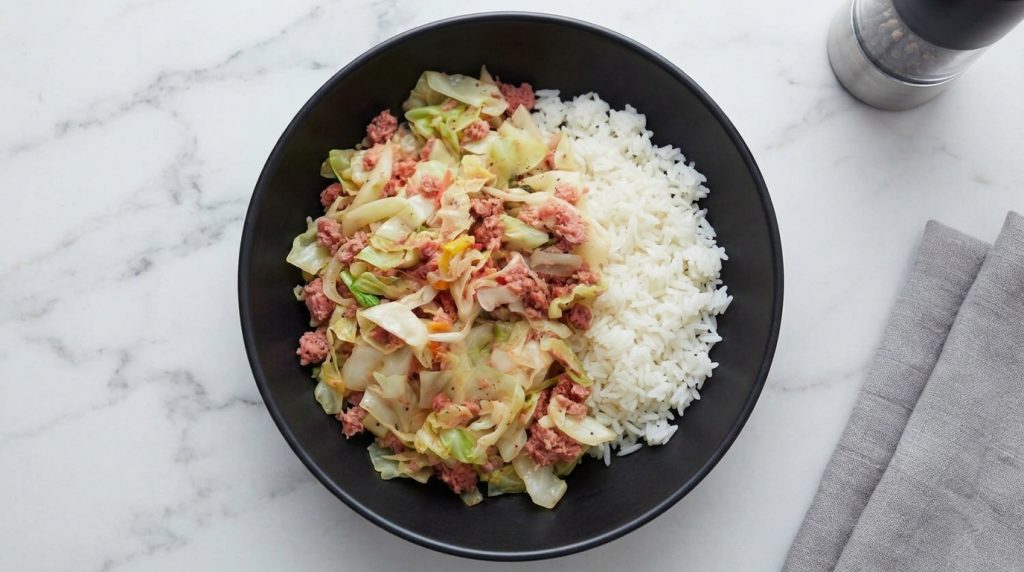

Jamaican Corned Beef and Cabbage
Description
Canned corned beef cooked down with onion, scallion, thyme and scotch bonnet, then finished with shredded cabbage and carrot and served over fluffy white rice. One small can stretches into a full dinner for five, and it comes together in a single skillet.
Ingredients
For the Rice
For the Corned Beef and Cabbage
For the Sauce
Instructions
Chill the Corned Beef
-
Place the unopened can of corned beef in the refrigerator for at least 20 minutes before you start. Chilling firms the fat so the beef turns out in solid blocks that break into neat chunks, rather than softening into a paste. Overnight is fine if you want to prepare ahead.
Prepare the Vegetables
-
Core the cabbage and slice it thinly, around 1/4 inch, so it cooks quickly and stays tender rather than soft. Grate the carrot on the coarse side of a box grater and chop the onion, scallions, garlic, bell pepper, tomato and scotch bonnet. Keep everything in separate bowls, because once the pan is hot the steps move quickly.
Cook the Rice
-
Rinse the rice in a fine sieve under cold running water for about 30 seconds, until the water runs clear instead of milky. Tip it into a medium saucepan with the water and salt, bring to a boil over high heat, then cover with a tight lid and reduce to the lowest setting. Cook for 15 minutes without lifting the lid, then remove from the heat and leave it covered while you make the rest. It will finish steaming on its own and the grains will be light and separate.
Soften the Seasonings
-
Heat the oil in a large deep skillet or sauté pan over medium-low heat. Add the onion, scallion whites, garlic, whole thyme sprigs, scotch bonnet and allspice, then cook gently for 6 to 8 minutes, stirring occasionally. The onion should turn soft and translucent and the pan should smell warm and fragrant. Lower the heat if anything starts to brown, as you want softness rather than color at this stage.
Add the Pepper, Tomato and Carrot
-
Stir in the bell pepper, tomato and grated carrot and cook for 4 to 5 minutes. The tomato will collapse into a soft, jammy layer at the base of the pan while the carrot turns tender and the pepper keeps a slight bite. The mixture will look loose and chunky, which is exactly right.
Brown the Corned Beef
-
Raise the heat to medium-high and add the chilled corned beef in chunks. Break it apart with a wooden spoon, pressing it into the seasonings, then leave it undisturbed for a minute at a time so parts of it catch and brown against the pan. This takes about 3 to 4 minutes. Stop while some texture remains, as soft pieces give a better result than a smooth paste.
Wilt the Cabbage
-
Add the cabbage in two or three handfuls, stirring each batch until it drops in volume enough to fit the next. It will look like far too much for the pan at first, then collapse to around a third of its size, which is completely normal. Once it is all in, cover the pan and cook for 3 minutes so the trapped steam softens it.
Finish the Pan
-
Remove the lid, stir in the ketchup and black pepper, and cook uncovered for a further 3 to 4 minutes so the liquid released by the cabbage can cook away. The mixture should look glossy and just moist rather than sitting in liquid, and the cabbage should still be bright green with a little snap in the thicker ribs. Lift out and discard the thyme stems, stir in the vinegar and most of the scallion greens, then taste and add the salt only if needed. If the pan looks dry, add the reserved water a tablespoon at a time.
Serve
-
Fluff the rested rice with a fork and divide it between five bowls. Spoon the corned beef and cabbage over the top so the sauce runs down into the rice, then scatter over the remaining scallion greens and a few fresh thyme leaves. Serve immediately, while the cabbage still has some bite.
Note
Chilling the can is optional but genuinely helpful. Corned beef at room temperature breaks down into a much softer texture in the pan.
Taste before adding salt. Canned corned beef is high in sodium, but spreading one can across this much cabbage dilutes it, so a small pinch is often needed at the end.
Adjust the heat to suit your household. Use 1/4 scotch bonnet for a mild version, or leave it out and serve pepper sauce at the table.
If the finished pan looks watery, keep cooking uncovered for another 2 minutes with the heat up. Cabbage releases more liquid than you expect, and it needs somewhere to go.
Store the mixture and rice in separate airtight containers in the refrigerator for 3 to 4 days. The cabbage softens noticeably by day two, so this dish is best eaten fresh.
Freezing is not recommended, as cabbage turns limp and watery once thawed. If you want to freeze ahead, cook the beef base without the cabbage and add fresh cabbage when reheating.
To reheat, warm in a skillet over medium heat for about 4 minutes, adding a tablespoon of water only if it looks dry. The stovetop keeps the cabbage in better condition than the microwave. Reheat rice separately with a splash of water and a lid on to trap the steam.