





Vegan Irish Stew
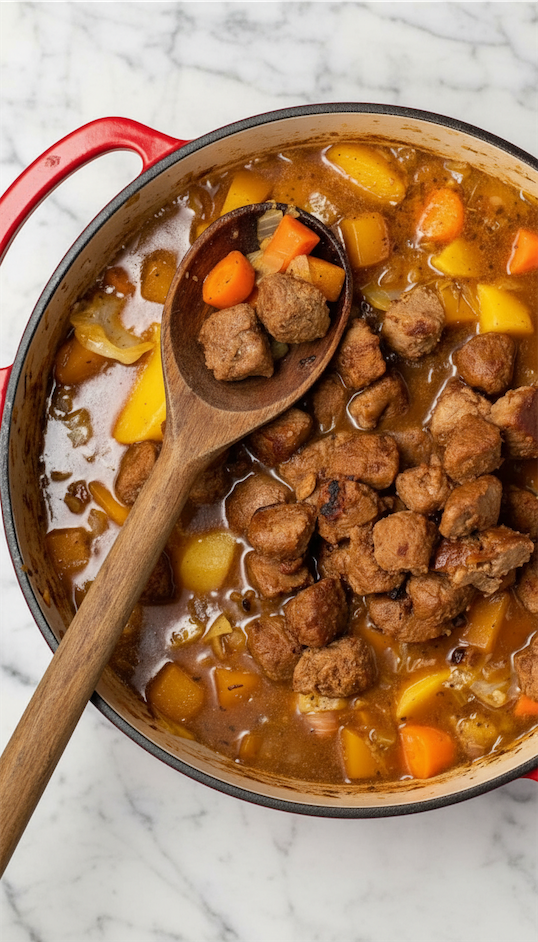
Traditional Irish Stew but vegan!
Ingredients
Instructions
-
Start by browning the vegan beef or mushrooms
-
Place a large Dutch oven over high heat and add the oil.
-
When the pot is hot enough that the oil moves easily across the bottom, add the vegan beef pieces or mushrooms.
-
Let them sear until golden and crisp on the edges.
-
Cook the onion, carrots and celery
-
Turn the heat down to medium.
-
Add the onion, carrots and celery to the same pot.
-
Do not wipe it out, any browned bits on the bottom will lift later and enrich the broth.
-
Cook until the vegetables begin to soften and take on a hint of color. If the pot looks dry, add a splash of oil.
-
Stir in the garlic and let it warm for about 30 seconds.
-
Sprinkle the flour over the vegetables and stir until everything is coated.
-
The flour should cook for a minute or two so the raw flavor disappears.
-
If you are using cornstarch, the mixture may thicken quickly here. (That is completely fine, it smooths out once the liquid goes in.)
-
Slowly pour in the stout while stirring, loosening the browned bits on the bottom of the pot as you go.
-
Those bits dissolve into the broth and deepen the flavor.
-
Stir until the mixture looks mostly smooth.
-
Small lumps are normal, they melt away as the stew simmers.
-
Stir in the rutabaga, potatoes, cabbage, stock, soy sauce, salt, pepper, sugar, bay leaves, thyme and rosemary.
-
The pot will look very full at this stage, but the vegetables soften and settle as they cook.
-
Bring the pot to a gentle boil, stirring often so nothing sticks.
-
Reduce the heat to medium low and let the stew simmer uncovered until the potatoes are tender and the broth thickens into a glossy gravy.
-
This usually takes 45 to 50 minutes. If you prefer a thicker stew, let it simmer a bit longer.
-
The potatoes begin to break down, which naturally thickens the sauce.
-
About 10 minutes before serving, return the vegan beef pieces or mushrooms to the pot.
-
This lets them warm through without overcooking.
-
Remove the herb stems before serving.
-
vegan irish beef stew served in green bowl
-
Ladle the stew into bowls and serve with bread or over mashed potatoes. The flavors deepen as it rests, and leftovers reheat beautifully.
Note
Can I make this stew ahead of time?
Yes. This stew actually improves after a night in the fridge. The vegetables continue to soften, the gravy thickens and the flavors deepen. Reheat gently and add a splash of stock if you prefer a slightly looser consistency.
Does the alcohol cook off?
Most of it does. The stew simmers long enough that the alcohol evaporates, leaving only the rich, slightly malty flavor of the stout. If you prefer to avoid alcohol completely, use a non alcoholic stout or extra vegetable stock.
What can I use instead of rutabaga or swede?
Turnips work well. If you want something sweeter and softer, you can replace part of the rutabaga with parsnips. The flavor will be lighter but still balanced.
Can I freeze vegan Irish stew?
Yes. This stew freezes well because there is no dairy. The potatoes soften slightly after freezing, which thickens the gravy even more. Thaw overnight and reheat on the stovetop.
How do I make the gravy thicker?
Let the stew simmer a bit longer. The potatoes naturally break down and thicken the broth as they cook. You can also mash a few potato chunks directly into the stew if you want a faster thickening method.
Can I cook this in a slow cooker?
Yes, but sear the vegan beef or mushrooms first for better flavor. Add everything to the slow cooker after step 4 and cook on low for 6 to 7 hours or on high for 3 to 4 hours. The gravy may be slightly thinner, so simmer uncovered for 10 to 15 minutes at the end if needed.
Is Guinness vegan?
Yes, Guinness is now brewed without isinglass. If you are using a different stout, check the label to make sure it is certified vegan.
Can I make this without vegan beef or mushrooms?
Absolutely. The stew is still hearty and flavorful with just vegetables. If anything, the broth becomes even richer because the root vegetables have more room to break down and thicken the gravy.
Will the cornstarch version taste different?
Not much. The texture is slightly glossier and the thickening happens more quickly, but the flavor stays the same once the stew has simmered.
