







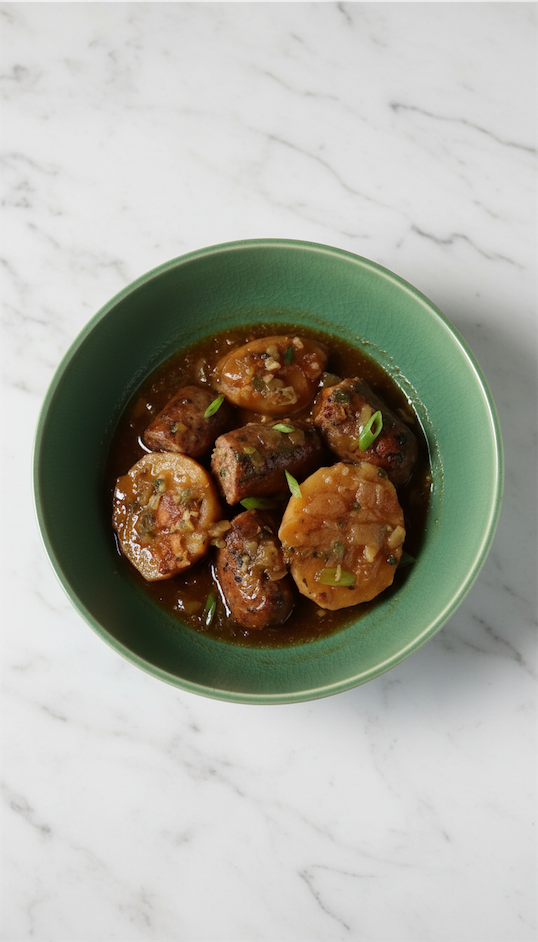
Dublin Coddle is one of those quiet, slow-cooked dishes that feels like it has been passed down through generations. The ingredients are simple, but as they simmer together the broth becomes rich and savory, the potatoes turn tender, and the sausages and bacon infuse everything with deep, comforting flavor. It is an easy, traditional Irish recipe that rewards patience and gentle heat.
What makes this version special is the way the onions, garlic and herbs melt into the broth while the stout reduces and adds a warm, malty depth.
Everything finishes low and slow in the oven until the potatoes soften, the sausages turn silky, and the broth becomes something you want to mop up with good bread.
It’s a cozy dish for cold evenings, relaxed weekends or anytime you want something satisfying with very little hands-on work.
Ingredients For Dublin Coddle
8 strips thick cut bacon, cut into 1-inch pieces
2 tablespoons butter
2 yellow onions, chopped
4 cloves garlic, minced
1 cup chopped green onions, plus extra for garnish
1 cup stout beer
1 tablespoon fresh thyme leaves
1/4 cup chopped Italian parsley
Freshly ground black pepper, to taste
2 teaspoons kosher salt, or to taste
pinch of cayenne
3 pounds Yukon Gold potatoes, peeled and halved
4 cups chicken broth
6 large pork sausages, about 2 1/2 pounds total
How To Make Dublin Coddle
Start by browning the bacon
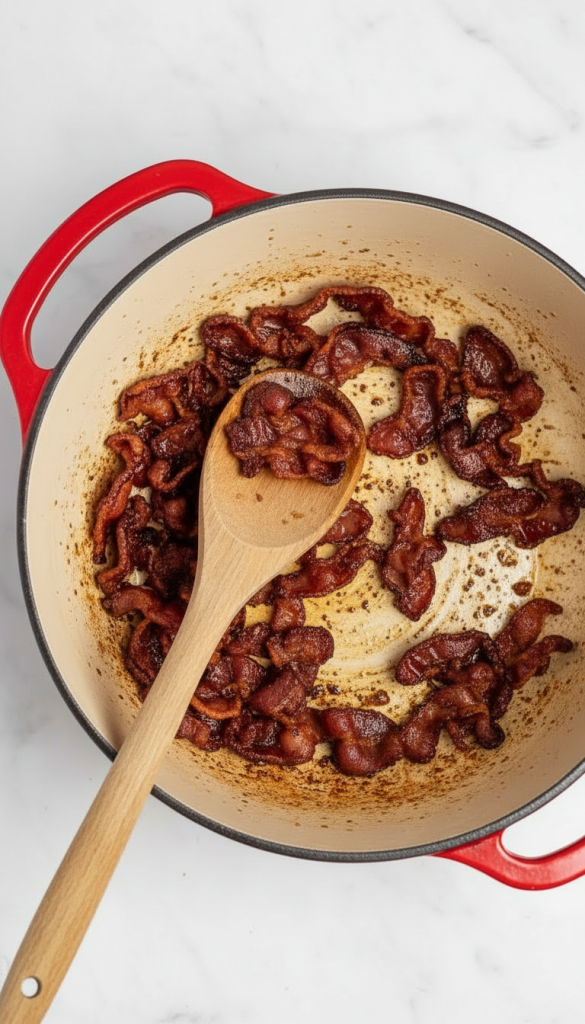
Place the bacon in a large Dutch oven and set it over medium heat.
Let the pieces cook slowly until they turn crisp around the edges and release their fat.
This should take about 8 to 10 minutes.
The goal is lightly browned bacon that flavors the base without becoming too dark.
Cook the onions and aromatics
Add the butter to the pot and stir it into the warm bacon fat over a medium heat.
Scatter in the onions with a pinch of salt and cook until they soften and turn translucent.
The moisture from the onions cools the pot slightly, which naturally slows any further browning of the bacon and keeps it from burning.
Add the garlic and green onions and let them cook for another minute or two, just until they smell sweet and fragrant.
Reduce the stout beer
Pour the stout into the pot and raise the heat slightly.
Let it simmer and reduce until about three quarters of the liquid has evaporated.
You should see the broth thicken slightly and smell the malty sweetness concentrate.
Season with thyme, parsley, black pepper, salt and a small pinch of cayenne. The herbs will bloom in the warm liquid.
Add the potatoes and broth
Nestle the halved potatoes into the pot, placing them so they sit in the developing broth.
Pour in the chicken broth and bring everything to a gentle simmer.
The potatoes will begin absorbing flavor immediately.
Layer the sausages on top
Prick each sausage with a fork a few times to prevent bursting, then lay them across the top of the potatoes.
They will release juices as they cook, enriching the broth and adding subtle pork sweetness.
Slow cook the coddle in the oven
Cover the pot with its lid and transfer it to a 300 degree F oven. Let it cook undisturbed for about 2 1/2 hours.
Remove the lid and continue baking for another hour so the broth reduces slightly and the flavors deepen.
Skim and finish
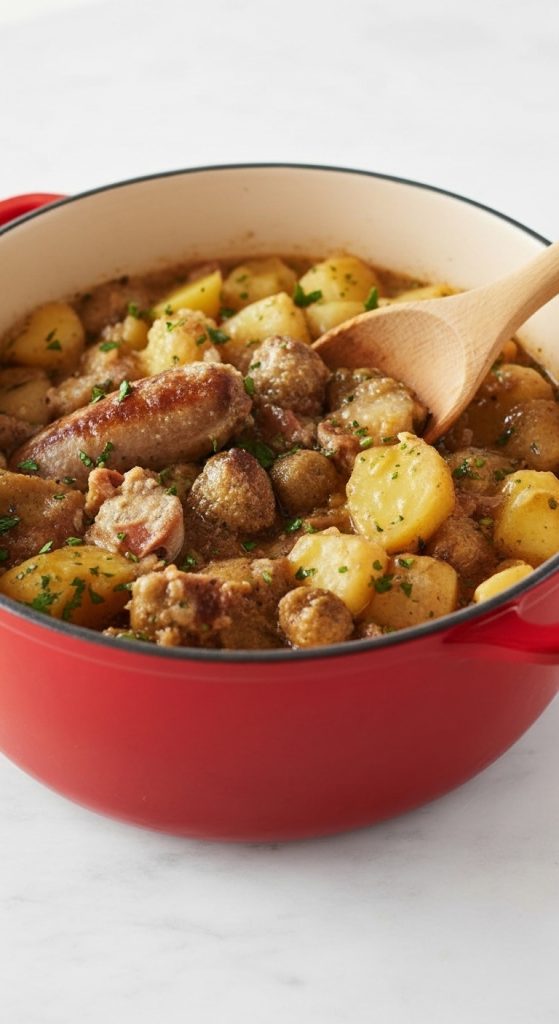
Take the pot out of the oven and let it settle for a minute.
Skim off any excess fat from the top.
Taste the broth and adjust the seasoning if needed.
Add a sprinkle of green onions for brightness.
Variations Of This Dublin Coddle
Swap in smoked sausage
Smoked pork sausages add a deeper, lightly smoky flavor and hold their texture well.
Add cabbage wedges
Nestle a few wedges of green cabbage between the potatoes before adding the sausages. The cabbage softens into the broth and adds gentle sweetness.
Use cider instead of stout
Hard cider creates a lighter, fruitier broth. It works well if you prefer a milder, slightly brighter flavor.
Incorporate whole grain mustard
Stir a spoonful of whole grain mustard into the broth after cooking. It adds warmth, tang and a bit of texture.
Serving Suggestions For A Dublin Coddle
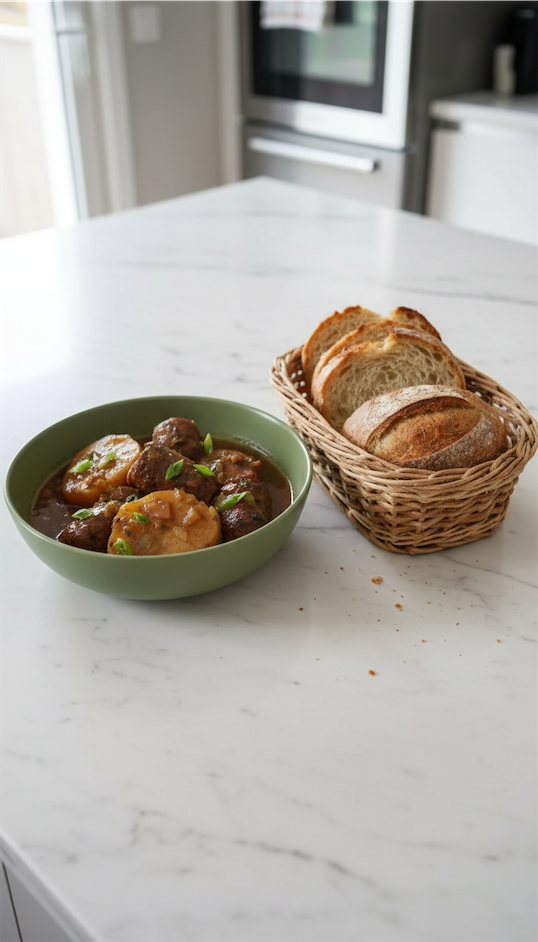
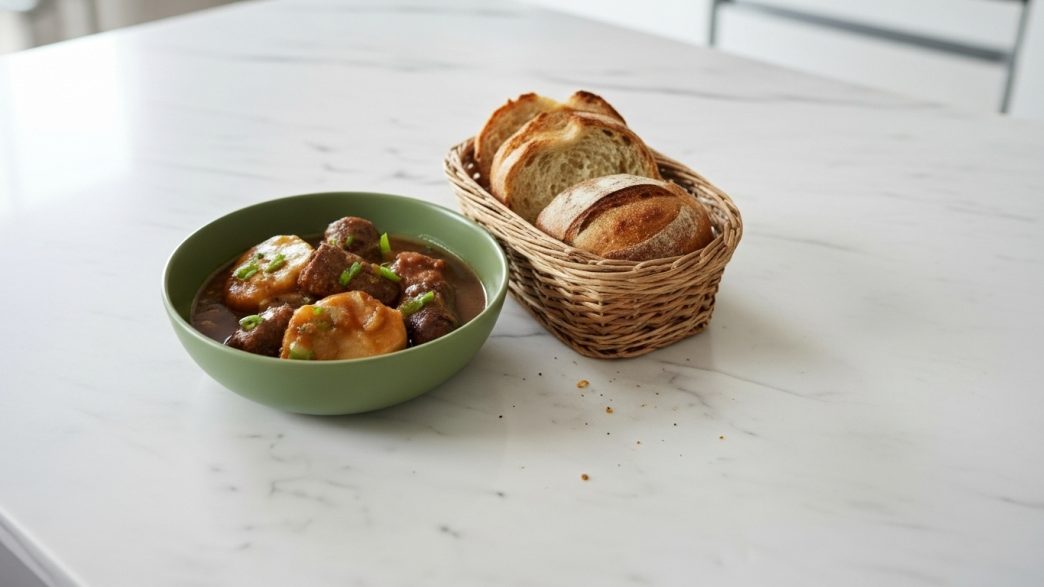
Serve Dublin Coddle in wide bowls so the broth and vegetables settle nicely.
Warm crusty bread is almost essential for soaking up the savory juices.
A simple green salad adds freshness beside the rich stew.
A small knob of butter melting over the potatoes is a cozy finishing touch.
Frequently Asked Questions
Can I make this ahead?
Yes, Dublin Coddle reheats beautifully. The flavors deepen overnight. Warm it gently on the stovetop with a splash of broth if needed.
Does it freeze well?
The sausages and broth freeze well, though the potatoes soften further. Keep them whole and handle gently when reheating.
Can I skip the beer?
You can replace the stout with extra broth or hard cider. The beer adds depth, but the dish is still comforting without it.
How can I thicken the broth?
Mash one or two potato halves directly into the broth after cooking. They dissolve and naturally thicken it.
Can I use different sausages?
Any mild pork sausage works. Avoid very spicy ones, which can overpower the gentle flavor.
Can I cook this on the stovetop?
Yes. Simmer on low heat for 2 to 3 hours, keeping the pot partially covered. Stir occasionally to prevent sticking.
Is this gluten free?
It can be, as long as the sausages and broth are made without added wheat. Check labels to confirm.
Recipe Card

Dublin Coddle
Description
A slow cooked Irish stew made with bacon, sausages, potatoes and onions simmered in a rich stout infused broth. Everything cooks gently in one pot until the potatoes turn tender, the sausages become silky and the broth develops deep comforting flavor.
Ingredients
Instructions
Brown the bacon
-
Place a large Dutch oven on the stove and set it over medium heat. Add the bacon and cook slowly until the pieces turn lightly golden and release their fat. Stir occasionally with a wooden spoon so the pieces cook evenly. The bacon should be softened and lightly browned, not crisp or dark. If the pot gets too hot, lower the heat to maintain a gentle sizzle.
Cook the onions and aromatics
-
Add the butter directly to the warm bacon fat and let it melt. Scatter in the chopped onions with a pinch of salt and cook on medium heat until they become soft and translucent. The moisture they release will naturally cool the pot and prevent the bacon beneath from overbrowning. Add the garlic and green onions and cook for 1 to 2 minutes until they smell fragrant and sweet without turning brown.
Reduce the stout
-
Pour the stout beer into the pot and raise the heat slightly until it reaches a gentle simmer. Stir with a wooden spoon, scraping the bottom to lift any browned bits (these enrich the broth). Let the beer reduce until about three quarters of the liquid has evaporated. The mixture should look slightly thickened and smell warm and malty. Season with thyme, parsley, black pepper, salt and a small pinch of cayenne.
Add the potatoes and broth
-
Place the halved potatoes into the pot, nestling them into the aromatics. Pour the chicken broth over the top and bring the mixture to a gentle simmer. The potatoes should be mostly submerged and beginning to soften around the edges. If a few pieces float slightly, that is fine, they will settle as they cook.
Layer the sausages on top
-
Prick each sausage on both sides with a fork to prevent bursting as they cook. Lay them across the top of the potatoes so they steam gently rather than brown. As they cook, their juices will drip into the broth and deepen the flavor.
Slow cook in the oven
-
Cover the Dutch oven with its lid and transfer it to a 300 F oven. Cook for 2 1/2 hours without disturbing it. Remove the lid and cook for an additional hour so the broth reduces slightly and the flavors deepen. The potatoes should be very tender when pierced with a knife and the sausages should look plump and glossy.
Finish and skim
-
Carefully remove the pot from the oven and let it rest for a minute. Use a spoon to skim off any excess fat from the surface. Taste the broth and adjust the seasoning if needed. Sprinkle extra green onions over the top before serving for a fresh aromatic finish.
Note
If you prefer a slightly thicker broth, gently mash one or two potato halves into the liquid at the end of cooking. If the bacon browns too quickly during the first stage, lower the heat and add the onions sooner, as their moisture prevents burning. You may replace the stout with apple cider or extra broth if desired. The dish reheats very well and the flavors deepen the next day.